
BenchFusion: The Bench Holds the Industry Together
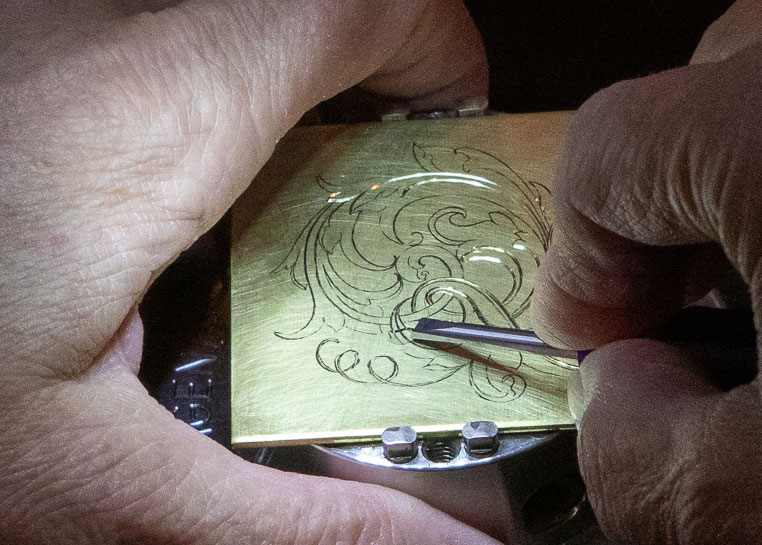
If you have spent years at a bench, you might have a complicated relationship with the idea of bench jeweler training. You know how much time it takes to really learn this work. You know how much of it cannot be rushed. You know how much of what you know lives in your hands rather than in words, and how difficult it is to explain to someone who has not been there why a piece failed, or why it worked, or why something couldn't (or could) be repaired, or why you knew something was wrong before you could say exactly what it was.
That lived reality is where BenchFusion starts.
When the jewelry industry talks about the shortage of skilled bench jewelers, that conversation starts way too late. The problem did not begin at hiring. It began when manufacturing left this country and the training that happened alongside it disappeared. When shops and plants were full, people learned by being around the work. Parents went home and talked about what they made. Kids grew up knowing what a bench was, what it meant, and that it was a viable way to make a living. As that infrastructure eroded, so did the informal training pipeline that sustained the trade. But talk is cheap. When the jewelry industry talks about the shortage of skilled bench jewelers, that conversation starts way too late. The problem did not begin at hiring. It began when manufacturing left this country and the training that happened alongside it disappeared. When shops and plants were full, people learned by being around the work. Parents went home and talked about what they made. Kids grew up knowing what a bench was, what it meant, and that it was a viable way to make a living. As that infrastructure eroded, so did the informal training pipeline that sustained the trade. But talk is cheap.
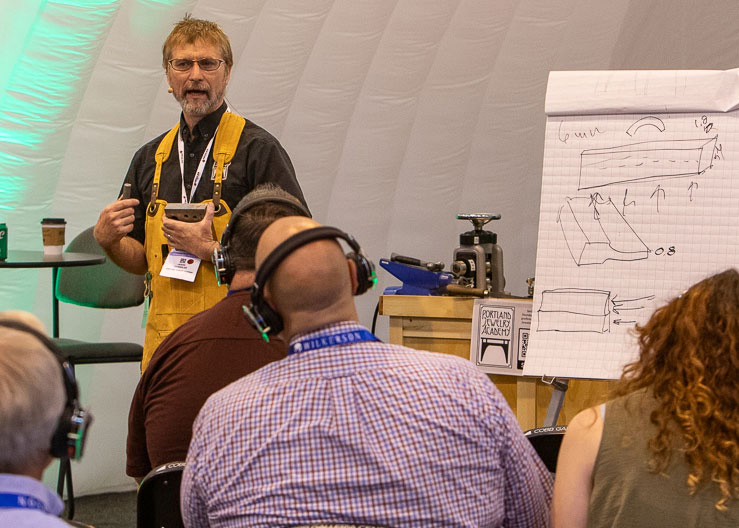
That's why BenchFusion exists. The industry needs places where that layered knowledge can be shared without being oversimplified or dressed up. BenchFusion provides a place for working jewelers to learn from one another, to watch how different hands approach the same problems, and to stay connected to a craft that continues to evolve even as its fundamentals are rooted in ancient practice. It puts bench knowledge onstage in the middle of a jewelry trade event, as a not-so-subtle nod to the fact that this industry does not exist without the bench. BenchFusion takes place at the Atlanta Jewelry Show, and it happens directly on the show floor.
For many retail stores, the bench is where trust is built or lost. Repairs. Resizing. Custom work. Fixing the thing that mattered to someone enough to bring it back rather than replace it. That work requires judgment as much as dexterity, and judgment only develops through experience. When that experience disappears from a store, or when it is outsourced without understanding, something important gets lost.
BenchFusion is not about nostalgia for the way things used to be. It is about continuity. The tools and technologies may change. The materials may change. The expectations of customers certainly change. But the need for people who can solve problems with their hands, under real pressure, does not go away.
One of the realities facing the industry is that many highly skilled bench jewelers are approaching the end of their careers. At the same time, fewer people are entering the trade, and those who do often arrive with uneven exposure. That is not a failure of effort. It is the natural outcome of an industry that has relied heavily on informal knowledge transfer without always creating enough shared spaces to support it. BenchFusion is one such space.
It allows jewelers to watch how someone else approaches a problem, not because there is one right way to do the work, but because seeing another method can clarify your own. It allows conversations that do not fit neatly into formal training, conversations about why you choose one approach over another, or how you adapt when conditions are less than ideal. Those are the kinds of exchanges that mostly happen online now, but they are so much more gratifying in person.
For the people who spend their days working with fire, metal, and tools that leave marks on both the work and the body, we offer respect. This work takes time, attention, and care, and without it, the rest of the industry does not exist. As our pipeline of master bench jewelers matures, if we do not replace them, the industry will lose far more than an employment pipeline.
Keeping that knowledge alive, accessible, and connected is valuable work. And for a craft that has always depended on steady hands, that feels about right.