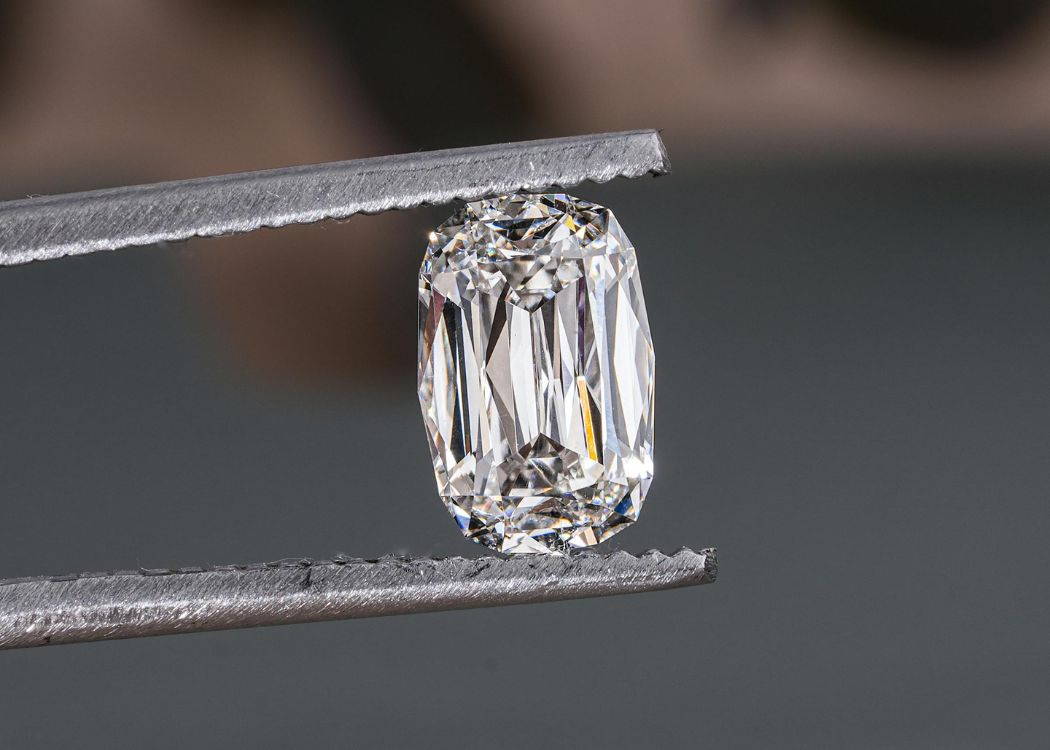
Following four years of sharply declining diamond prices, the Russian government mandated in June that man-made diamonds be labeled “synthetic” rather than “lab-grown” or any other moniker. Russia’s Alrosa, which accounts for over a quarter of the world’s diamond extraction, reported a loss of $130 million for the first half of 2026, according to Rapaport. While sanctions against Russia account for some of these losses, the company’s struggles reflect the position of the wider diamond industry in 2026.
The change has lab-grown diamond (LGD) suppliers and retailers in other countries worried that the US, EU, China, or India will follow suit, but other countries are unlikely to follow Russia’s lead. (It is worth noting that Belgium enacted a similar law in 2023 and France recently upheld a 20-year-old law stating that lab-grown diamonds be referred to only as synthetic diamonds.) De Beers, however, has taken it upon themselves to call their lab-grown diamonds “synthetic lab-grown.” It is an effort to highlight the scarcity and aura of “naturalness” of mined diamonds at a time when customer confusion about the two categories of diamond has eaten into profits.
As lab-grown diamonds became cheaper to produce, driving the price down, the diamond industry as a whole expected consumers to see low-cost lab-grown diamonds as a cheap imitation of rarer and expensive mined diamonds. Lab-grown diamond marketing, meanwhile, emphasized the identical chemical composition of lab-grown and mined diamonds, creating confusion and ultimately pulling down the value of mined diamonds.
LGD have certainly done their part to put a dent in diamond prices, but they’re not the only culprit. The story is the same for many sectors: the pandemic changed buying habits, with money saved for vacations and restaurants going instead to purchases of luxury goods and electronics that could be enjoyed at home. Those increased sales were not sustainable, however, and these industries are now in the midst of a market correction.
The truth is, the world economy never fully recovered from the pandemic. The businesses that over-hired between 2020 and 2023 ended up laying off many of those employees, and now the rising cost of living coupled with the uncertainty wrought by global geopolitical instability has luxury consumers all over the world postponing proposals and weddings and putting off major purchases.
This doesn’t mean luxury consumers have stopped buying luxury altogether. As we outlined in this article, they’ve moved to spending wisely on more meaningful purchases. It is possible to sell in lower volume overall while increasing customer lifetime value by identifying your ideal customers and giving them the kind of meaningful jewelry they can’t get from anyone else.
With no relief from a challenging economy and the downward price pressure of LGD in sight, the goal today is to create a new story around diamonds, one that resonates with consumers on a personal level. Tradition and prestige has less of a hold on today’s luxury consumer. What does resonate is authenticity and identity. Incorporating mined diamonds into designer pieces in meaningful, intentional ways might be one way to return the aura to the diamond.