If you follow pop culture, you’ve probably been seeing the headlines all year: Gen Z and younger Millennials are leaving social media. They’re trading in their smartphones for dumbphones. They’re replacing Spotify with an MP3 player or a Discman. They’re pining for the good old days of their older Millennial and Gen X parents’ adolescence, when the Internet came to you slowly via the phone line, when phones had lines, when you popped a cartridge into the Super Nintendo and a CD into the 5-disc changer after school. After the 80s dominated our imaginations for a solid two decades, it seems like the 90s and early 00s are having their moment.
The way young people today experience 90s nostalgia can be broken into two camps. The first covers a brief moment in the early 90s, from about 1992 to 1995: the flannel shirt and greasy hair grunge era. The other encompasses a longer stretch of time, from about 1995 to 2007. Historians talk about “the long nineteenth century,” spanning the French Revolution in 1789 to the beginning of World War I in 1914. Today, the nostalgic among us are gripped by the long 1990s (1995-2007), a time better known as the Y2K era.
The Land Before Smartphones
The iPhone, first released in 2007, turns 20 in 2027. Gen Z never lived in a world without that little glowing rectangle sucking away their free time and filling every second with something to distract them. That distant land, where boredom wasn’t a monster to constantly evade but an invitation to touch grass, daydream, or even get lost in reading a book, looks like a long lost utopia to today’s stressed and anxious, overstimulated young people.
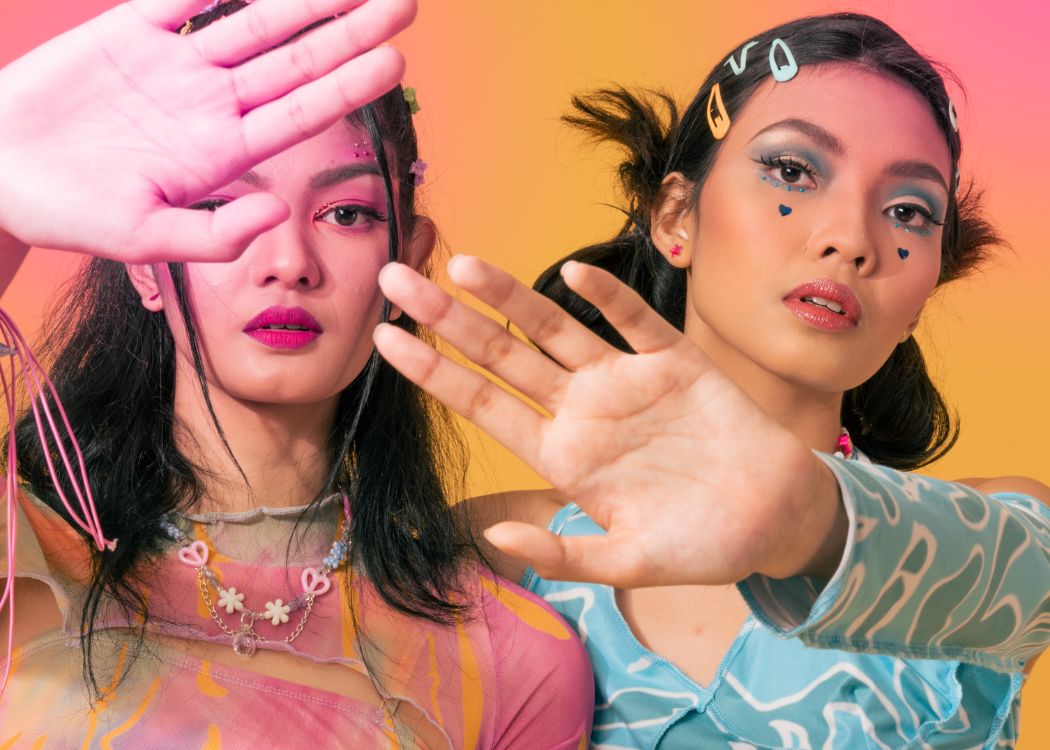
The Y2K aesthetic, shorthand for a particular visual style prominent during the turn of the century, first surfaced online as a coherent historical moment in the 2010s. Since then, it’s been a niche nostalgic touchpoint for a certain kind of extremely online person pining for the days when the future looked fun.
The Cultural Signifiers of Y2K
The shiny outfits and vaguely futuristic, fluorescent-lit backgrounds of the music video for *NSYNC’s 2000 hit “Bye Bye Bye.” The translucent curves of the Apple iMac. Digital cameras and minidisc players. The 1998 Volkswagen New Beetle. Bug-eyed wraparound sunglasses. That’s the Y2K aesthetic.
Y2K Jewelry
2027 could be the year that Y2K goes mainstream. What does all this mean for luxury jewelry? The Y2K look is glossy, chunky, with the reflective finish of a 1950s fighter jet. It’s round, blobby, and inviting, not sharp-edged and minimalist. Fun, organic, unexpected shapes, polished white gold, pale and pastel gemstones like morganite, sapphire, or aquamarine. Thick rings, thick bracelets, asymmetrical charms and pendants. Jewelry big enough, physically or conceptually, to stand out against your baggy, shiny silver tracksuit.
Y2K is the polar opposite of “quiet luxury.” It’s a look defined by big, colorful statement pieces. In a previous blog, we observed that people are buying fewer pieces of jewelry, but spending more on just a few meaningful pieces. In that kind of environment, this kind of bright and bold look is primed to make a comeback. The Y2K aesthetic is already here in fashion jewelry, and popular trends at the bottom end of the market often influence luxury designs.
Can the Future Still Be Fun?
At the dawn of the millennium, product design and fashion made the future look fun. That’s the draw of Y2K nostalgia: it reminds us of a time when our vision of the future was colorful, fun, fluid, soft, comfortable, inviting, and, most importantly, hopeful. If Y2K does go mainstream in the next year, it’s because it gives us an aesthetic vision we desperately need.